
Executive Summary
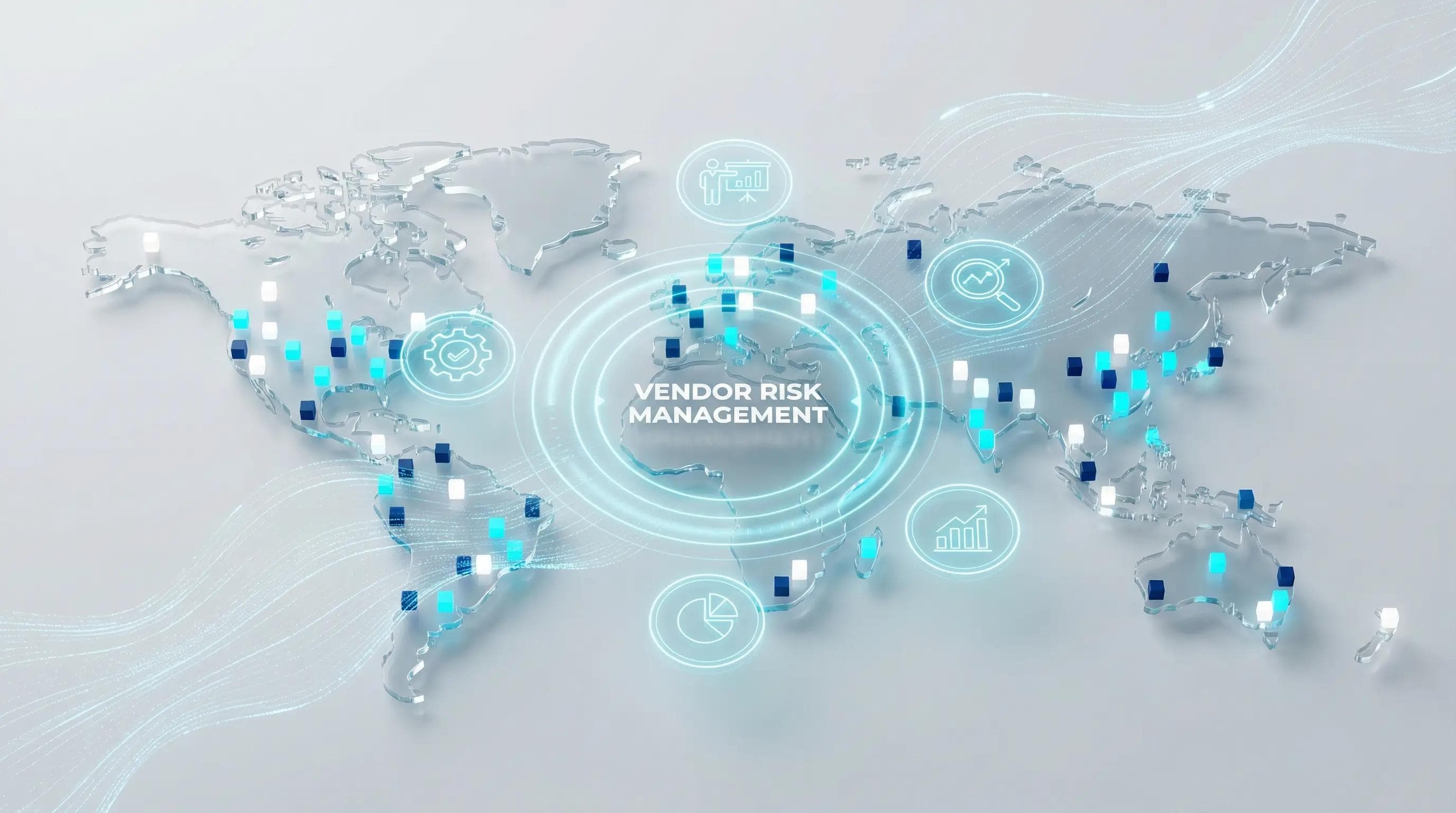
You can outsource your payroll, your cloud hosting, and your customer service, but you cannot legally outsource your risk. Modern enterprises operate within deeply interconnected digital supply chains, where a breach at a low-tier marketing vendor can expose millions of your customer records.
With stringent supply chain regulations codified in NIS2 and DORA, establishing a formal Vendor Risk Management (VRM) program is no longer an enterprise luxury; it is a legal necessity. This guide explains how to build a scalable VRM program from scratch.
The Business Problem: The Weakest Link
Historically, organizations focused their security budgets exclusively on their internal perimeters. Threat actors adapted, realizing that attacking an enterprise directly was difficult.
Instead, they target the enterprise's third-party software providers, IT consultants, and law firms—organizations that have trusted, often highly-privileged access to the enterprise's data but lack the budget for extensive cybersecurity defenses.
The Regulatory Hammer
Regulators recognize this vulnerability. Both the GDPR and the new NIS2 directive explicitly hold the parent organization liable if customer data is breached via a third-party vendor, provided the parent organization failed to conduct adequate due diligence.
The Framework: The VRM Lifecycle
A mature Vendor Risk Management program is a continuous lifecycle, not an annual questionnaire.
1. Vendor Inventory and Triage (Mapping)
You cannot secure what you do not know exists. The first step is cataloging every third-party vendor. Once cataloged, they must be triaged based on risk.
- High Risk: Vendors with direct access to your internal network, PII, or financial data (e.g., Cloud providers, outsourced IT).
- Medium Risk: Vendors who process confidential but non-critical business data.
- Low Risk: Vendors providing generic services (e.g., office catering software) with no integration into core systems.
2. Due Diligence and Assessment
Our TISAX® and ISO 27001 experts help European automotive suppliers achieve compliance with 95 days.
Based on the risk tier, the vendor is assessed before a contract is signed.
- For High-Risk vendors, a simple questionnaire is insufficient. Require independent validations like a SOC 2 Type II report, an ISO 27001 certificate, or a TISAX label.
- Analyze their specific security controls, particularly their Incident Response timelines.
3. Contracting and SLAs
Security requirements must be legally binding. Ensure contracts explicitly mandate:
- The right to audit the vendor's security controls annually.
- Strict SLA timelines for notifying your organization if the vendor suffers a breach (e.g., within 24 hours to comply with NIS2).
- Data destruction protocols upon contract termination.
4. Continuous Monitoring
Risk is dynamic. A vendor who was secure in January may experience a massive architecture change in June. Implementing continuous monitoring tools that actively scan your vendor's external attack surface provides ongoing assurance between formal annual audits.
Expert Insights: Stopping "Shadow IT"
The most sophisticated VRM program is useless if the marketing department can circumvent IT and purchase a new SaaS analytics tool with a corporate credit card.
A critical component of a successful VRM strategy—often spearheaded by a Virtual CISO—is integrating security approvals directly into the corporate procurement process. No invoice should be paid, and no contract signed, without a documented sign-off from the security team confirming the vendor has completed the VRM assessment.
Secure Your Supply Chain
Don't let a third-party failure trigger a first-party crisis. ITIS-Secure helps enterprises design, deploy, and manage scalable Vendor Risk Management programs that satisfy stringent regulatory audits and drastically reduce systemic risk.

About Iulian Bozdoghina
Lead Auditor and Consultant
"Iulian Bozdogina is a veteran cybersecurity strategist with over 15 years of experience in securing automotive supply chains and critical infrastructure. He specializes in TISAX®, ISO 27001, and the emerging NIS2/DORA regulatory landscape."